
A compact PPS ultrasonic atomizer for selected liquid atomization projects. The PPS housing, retaining rings and mechanical float-type water-level sensor work with quartz-glass discs in OEM systems.
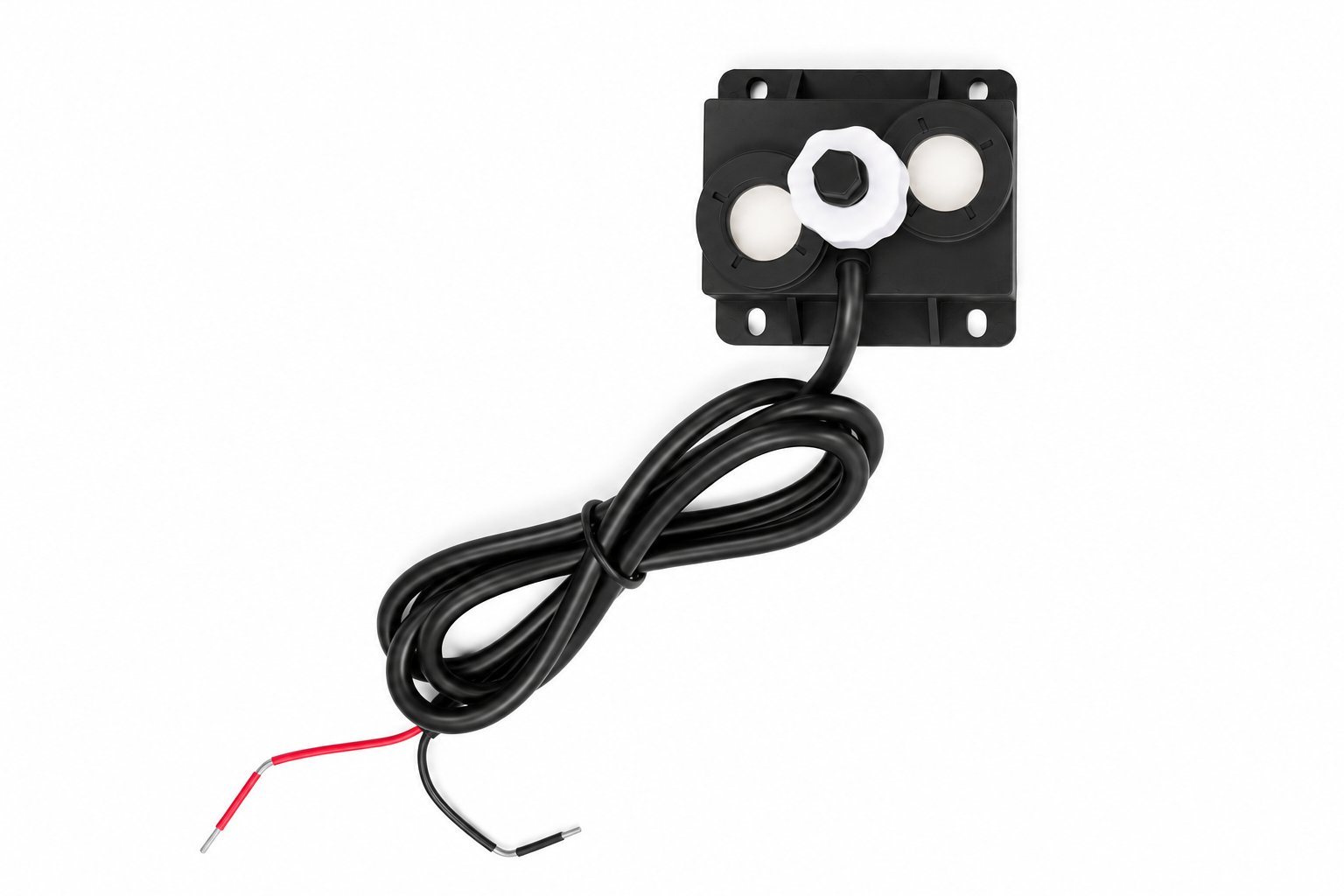
| Model | MS-02P |
|---|---|
| Atomizing heads | 2 |
| Corrosion-resistant components | PPS plastic housing; PPS retaining rings; PPS mechanical float-type water-level sensor |
| Atomizing discs | Ø25 mm quartz-glass discs |
| Operating frequency | 1.7 MHz |
| Nominal DC input | 36 VDC; 24–36 VDC for adjustable output |
| Current | 1.6 A |
| Power | Approximately 58 W at rated input |
| Atomization capacity | 1.2–2.0 L/h, depending on operating conditions |
| Typical droplet size | Up to 10 μm; depends on operating conditions |
| Liquid over-temperature stop / recovery | 40–50 °C / 30–38 °C |
| Disc service interval | 3,000–4,000 h, depending on liquid and operating conditions |
| Dimensions | 76 × 82 × 27 mm |
| Cable | 1.5 m |
| Recommended DC power supply | 100 W matched power supply, supplied by factory |
| Water-level control | PPS mechanical float-type water-level sensor with dry-run protection |
| Recommended operating water level | 75 mm from the bottom of the atomizer to the liquid surface |
| Low-water protection | Stops approximately 45 mm below the top of the mechanical sensor rod; actual cutoff may vary with water quality |
| Certification and protection | CE; IP67 |
Use the correct polarity (red positive, black negative). Maintain a stable liquid level, allow ventilation and clean the module regularly. Atomizing discs are consumable parts.
The recommended operating water level is 75 mm from the bottom of the atomizer to the liquid surface, approximately level with the top of the mechanical sensor rod.
The matched DC power supply is 100 W. Confirm the output voltage on the supplied unit label before installation.
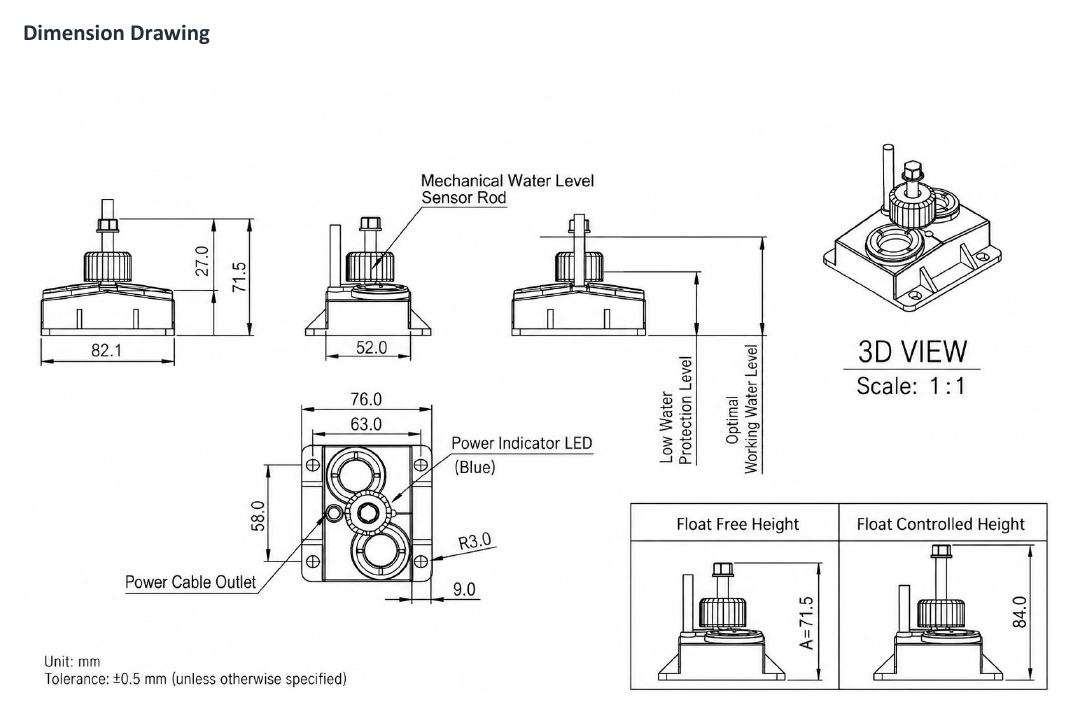
Dimensions are in millimetres. Refer to the datasheet for installation details.
Corrosion-resistant design for selected liquid atomization applications.
The datasheet lists selected dilute aqueous disinfectants below 500 ppm, including quaternary ammonium compounds, chlorine dioxide, hypochlorous acid and sodium hypochlorite.
Actual chemical compatibility depends on liquid composition, concentration, temperature and operating conditions. Sample testing under actual conditions is recommended.
Share the formulation and concentration. Test a sample under your actual operating conditions before production use.
Yes. They are consumable parts; refer to the service interval in the technical specifications.